Norway built the world's salmon habit. Its fjords are paying
Norway farms more Atlantic salmon than anywhere on earth, and the fish is now its biggest export after oil. The waste from those farms has nowhere to go but the narrow coastal inlets it is raised in.
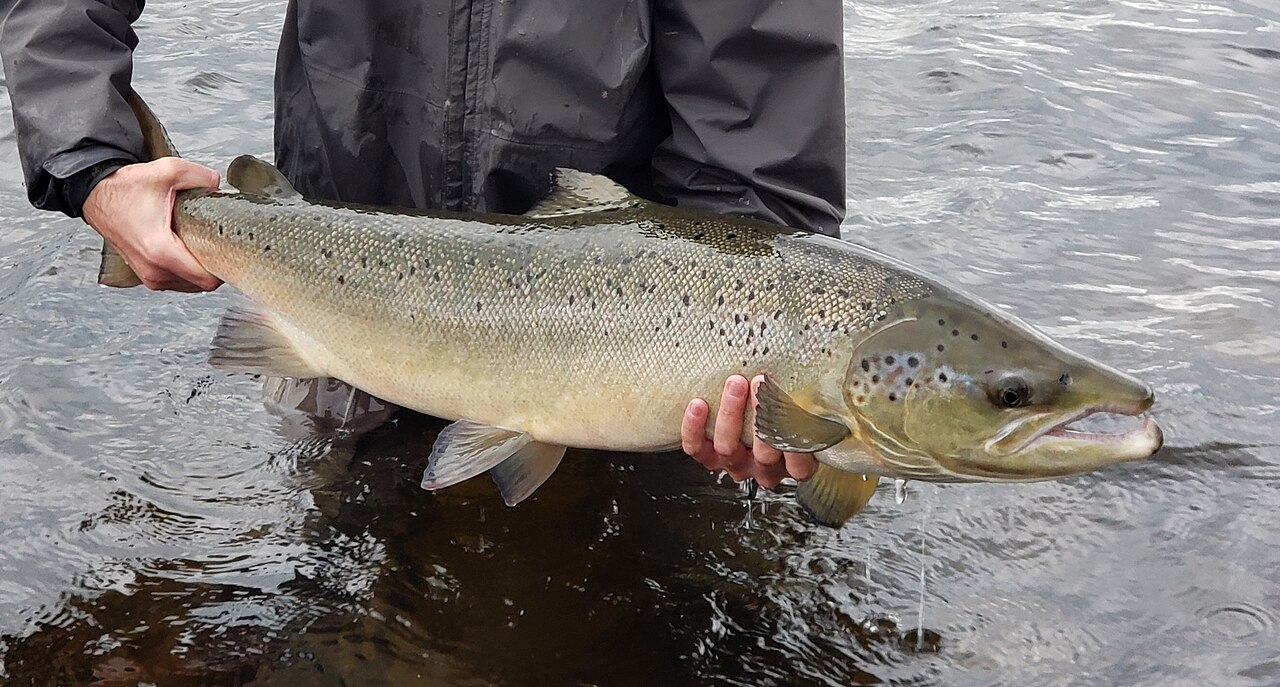
Norway's salmon farms bring in around $18 billion a year, which makes fish the country's largest export after oil. Those farms sit in fjords: long, steep-sided inlets gouged out by glaciers, deep in the middle and connected to the open sea through comparatively narrow mouths. Whatever a farm releases stays inside that basin until the water slowly exchanges itself, which can take a very long time.
The uncomfortable question for Norway is not whether the fjords are deteriorating. Regulators and marine biologists have the measurements. It is whether a country can put limits on an industry after that industry has become one of the things paying for the country.
Selling raw fish to a nation that did not want it
The business started with a biological obstacle. Atlantic salmon are aggressive animals, and early attempts to raise them in enclosures failed because the fish tore into each other. It took Norwegian farmers and scientists years of selective breeding to arrive, by the mid-1980s, at an animal that grew quickly and tolerated being packed in with thousands of its neighbours. The salmon in Norway's pens today is a domesticated creature, about as far from a river fish as a battery hen is from a wild fowl.
Then came the commercial obstacle: hardly anyone wanted to eat it uncooked. Japan, the obvious buyer for a fatty pink fish, was uninterested. Sushi had been eaten there for a thousand years, but the fish of choice was tuna, and salmon carried a reputation as a parasite risk and a poor thing to serve raw.
The push came when a large producers' cooperative went under and left the country sitting on 30,000 tonnes of fish with no buyer. The Norwegian government responded with a decade-long state marketing operation aimed squarely at Japanese tastes. It moved 5,000 tonnes there to begin with, then spent years courting importers and restaurant owners at its embassy in Tokyo until the resistance gave way.
It worked completely. Salmon is now unremarkable on a Japanese sushi counter, and the campaign coincided with a Western enthusiasm for omega−3 fatty acids that reclassified oily fish as something close to medicine. Global appetite for salmon has more than doubled in twenty-five years. Norway now supplies more than half of all farmed Atlantic salmon, with operations in Scotland, the Faroe Islands and Chile, and an industry roughly eighteen times the size of Tasmania's. Production rose by almost 200,000 tonnes last year alone. Quiet fishing villages turned into processing towns, and tens of thousands of jobs appeared along a coast that had been losing them.
The pens have no bottom
A standard salmon farm is a ring of netting suspended in open water, holding as many as 200,000 fish. Netting keeps salmon in. It keeps nothing else anywhere. Faeces, urine and the feed pellets that fall past the fish drop through the mesh and into the fjord below.
Inside a bounded basin, that material behaves like fertiliser. The extra nutrients feed fast-growing algae, which blanket kelp forests in a brown sludge and, as they die and rot, strip oxygen out of the deeper water. Rising sea temperatures compound the effect, because the algae that thrive in these conditions thrive harder when it is warm. Farms are not the only source of nutrients — agricultural runoff and industrial discharge contribute too — but farm waste is continuous, concentrated, and delivered precisely where the flushing is weakest.
The record shows up starkly in the Hardangerfjord, one of the most intensively farmed stretches of the coast, where oxygen in the deepest water has fallen by as much as a third since the 1950s. Past a certain threshold, the seabed simply stops supporting life. Divers who have returned to the same sites annually describe places they cannot recognise from one season to the next. And the damage does not reset itself: pesticides applied decades ago have been detected at a site left empty for twenty years.
The fish show the strain first
The animals themselves are the clearest evidence. Diseases and parasites that barely mattered before industrial-scale farming — sea lice above all — spread readily among densely stocked, genetically similar fish, and warmer water helps them along. Salmon arriving at slaughterhouses increasingly carry open ulcers and other defects. These are graded as "production fish", the lowest of the three quality categories, and the share falling into it has more than doubled in under a decade. The damaged flesh is cut away and the rest is filleted, frozen and exported, invisible to whoever eventually buys it. A veterinarian who spent his career in Norwegian government service puts the blame on how the fish are bred and handled, and notes what the wounds imply: an animal in that condition has been in pain for a long stretch before it was killed.
Salmon was meant to be the next oil
Here is where the ecology runs into the arithmetic. Norwegian politics has spent two decades looking for the industry that will replace petroleum, and salmon was nominated. That framing turns environmental criticism into something closer to disloyalty, and it is backed by wealthy coastal owners and an effective lobby. The industry's trade body disputes that farming is responsible for falling oxygen levels at all, pointing to official risk assessments and arguing that the declines are largely measured away from farm sites.
The incentives underneath are plainer than the science. A farm captures the revenue from every extra tonne it grows. The cost of a degraded fjord is spread across everyone else — the wild fishery, the tourism, the future. Nobody's balance sheet carries it, so nobody's balance sheet argues for restraint. One regional regulator, faced with applications to quadruple farming in his area, refused them on ecological grounds. That is roughly the extent of the brake available.
An egg that costs ten times more
There are engineering answers. One company is building a submersible pen that sits deep enough to stay below the sea lice, and a sealed system — they call it the Egg — that holds the fish apart from the surrounding water so waste is captured rather than released. Fewer young fish die inside it. It also costs at least ten times what an open net pen costs, which is why, despite government subsidies, it remains a prototype rather than a replacement.
That gap is the whole problem in a single number. The damage became visible only after the industry grew large enough to make restricting it politically unthinkable, and the fix arrived priced beyond what a volume business will voluntarily pay. Which leaves one thing to watch: whether closed-system farming gets cheap enough to matter before the fjords pass the point where recovery is no longer on offer — because if it does not, the limit will be set by the water rather than by anyone in Oslo.
The full reporting from Norway's fjords is available from the ABC, and the mechanics of salmonid aquaculture are worth understanding alongside it.
Questions
Why does farm waste damage fjords more than waste released into the open ocean?
Fjords are long, deep inlets with narrow openings to the sea, so water exchanges slowly. Nutrients from faeces, urine and uneaten feed accumulate rather than dispersing, feeding algae that smother kelp and strip oxygen from deep water. In the Hardangerfjord, oxygen at depth has fallen by up to a third since the 1950s.
Is farmed salmon with ulcers safe to eat?
According to a former Norwegian government veterinarian, yes — the wounds are cut away and the remaining flesh is filleted and sold, often frozen and vacuum-packed, so consumers never see the damage. The objection raised is about animal welfare rather than food safety: a fish with open ulcers has likely suffered for a long period before slaughter.
Why did Japan start eating salmon sushi?
Because Norway's government spent a decade selling it to them. Japanese cuisine had long treated raw salmon as a parasite risk and preferred tuna. After a producers' cooperative collapsed and left Norway holding 30,000 tonnes of unsold fish, the state ran a marketing campaign that shipped 5,000 tonnes to Japan and courted importers and chefs at its Tokyo embassy until the market opened.
Can closed-containment farming replace open net pens?
Technically it already works — sealed systems capture waste and keep fish away from sea lice, and fewer young fish die. The barrier is cost: at least ten times that of an open net pen, even with government subsidies. Until that gap narrows, closed systems stay prototypes rather than an industry-wide replacement.