Battery Makers Are Betting Billions on a Solid Electrolyte
Swapping the flammable liquid inside a lithium-ion cell for a solid could strip out dead weight and reduce fire risk. It has also proved stubbornly hard to do, and the industry's own leaders say commercial viability is not yet established.
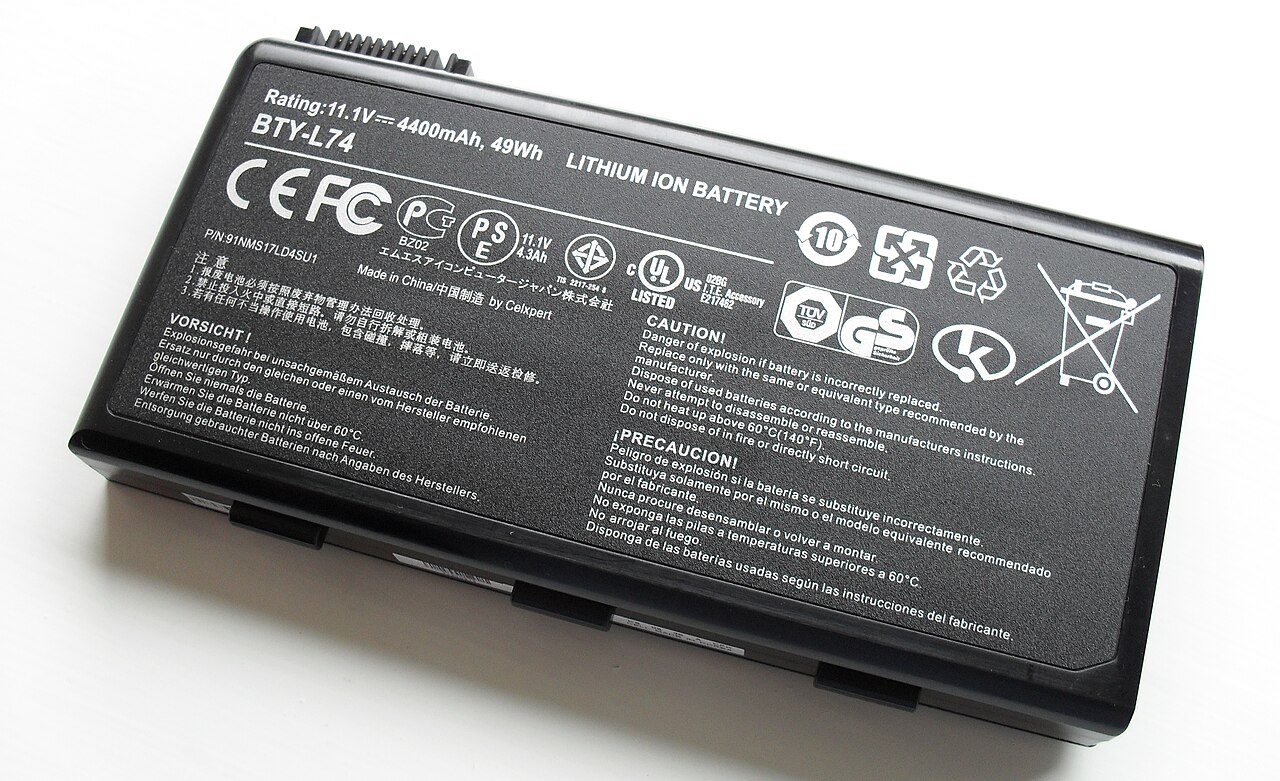
Inside the battery pack of an electric car, the substance that actually stores the energy is a small minority of what you are hauling around. As of 2019, every gram of lithium taking part in the reaction needed roughly 70 grams of supporting material: graphite sheets on one side for the lithium to slot into, a host compound such as lithium iron phosphate on the other, a liquid to ferry charged particles between them, a thin plastic sheet to stop the two sides touching, metal foils to collect the current, and a case to hold the whole assembly together. The ratio has improved since then, but not dramatically.
That number — the packaging tax on a battery — is what the current global push into so-called solid-state batteries is aimed at. The Chinese manufacturer CATL, the largest battery maker in the world, had more than a thousand people working on the technology as of 2024. BYD, LG and Samsung all have programmes. American and European startups have collectively raised more than $4 billion for it. The idea itself is simple to state: take the liquid out and put a solid in its place. Everything difficult follows from that.
A battery is a controlled fall
Every chemical reaction that releases energy does it the same way. Electrons sit in an arrangement around atomic nuclei that is stable but not the most stable one available; nudge them, and they rearrange into a lower-energy configuration, shedding the difference as heat, light or motion. It is close enough to a ball resting in a dimple near the top of a hill. It will stay there indefinitely, but a small push sends it rolling, and the energy it gives up on the way down is set by how far it fell.
A battery is an arrangement for making that fall useful instead of merely hot. When a lithium-ion cell discharges, lithium moves from the graphite anode, where it sits loosely wedged between carbon layers, to the cathode, where it settles into a lower-energy home. Crucially, the charged lithium atoms travel through the electrolyte — the medium in the middle — while their electrons cannot. The electrolyte is deliberately an insulator to electrons, so they are forced to take the long way round, through the wire and whatever you have plugged into it. That detour is the electricity. Charging reverses it: an external voltage pushes the electrons back uphill and the lithium follows.
Lithium is the element of choice because, paired with the right partner, its electron has further to fall than any other metal's, and because a lithium atom is extremely light. Per kilogram, the reaction releases roughly as much energy as burning petrol.
Which raises the obvious question of why an electric car's pack is so much heavier than its fuel tank. Part of the answer is that a petrol engine gets half of its reaction for free. Burning fuel needs an oxidiser — something for the electrons to fall into — and the atmosphere supplies it. A car carrying its own would need about 3.5 kilograms of oxygen for every kilogram of petrol. A battery has no such luxury: the cathode is the destination, and it rides along. The rest of the answer is that 70-to-1 scaffolding. It is worth saying that the raw energy comparison flatters petrol anyway, since an internal combustion engine converts only a fraction of what it burns into motion at the wheels, while an electric drivetrain delivers most of it.
The metal trees that ruin batteries
There is a second, sharper reason to want the liquid gone. The graphite anode holds lithium only weakly — that is the point, since the lithium has to leave easily for the battery to work. But under the wrong conditions, particularly fast charging in the cold, lithium arriving at the anode during charging does not slot neatly between the carbon layers. It grabs an electron at the surface and plates out as metal, growing branching filaments called dendrites.
If a dendrite grows far enough to pierce the separator, it bridges the two sides of the cell directly. The reaction that the whole elaborate structure exists to meter out then happens all at once, in the wrong place. The filament itself usually melts and breaks the connection within moments, but the heat can be enough to touch off further reactions in the surrounding materials — thermal runaway, the mechanism behind the fires that make battery factories evacuate and electric cars burn in car parks. An enormous amount of engineering goes into preventing this.
A solid electrolyte that is genuinely rigid should, in principle, physically block the filaments. And if dendrites stopped being a threat, the graphite could be thrown out altogether and replaced with an anode of pure lithium metal — the single biggest cut you could make to the scaffolding, and the real prize.
Why it keeps not arriving
The catch is that "solid-state" describes a category, not a solution. The label is also a slightly misleading borrowing from electronics: a solid-state cell is still a chemical cell, not a change of paradigm on the order of replacing a mechanical switch with a transistor. Candidate solid electrolytes include ceramics, sulphides and polymers, and they fail in different ways. Most of them, in practice, do not actually stop dendrites — the filaments find grain boundaries and cracks and travel through anyway. Solids also have to stay in intimate contact with electrodes that swell and shrink on every cycle, a problem liquids solve for free.
The safety case is real but narrower than the marketing suggests. The solvents in today's electrolytes are flammable, though they do not ignite until well above 350°C, and a pack full of lithium metal introduces hazards of its own. The clearer near-term gain may be in manufacturing, where cells are at their most volatile on the production line.
CATL's chairman places the technology at four out of nine on the standard scale of technological readiness — a working laboratory demonstration, several stages short of a product — and has said commercial viability has yet to be established. The detailed case for why the industry is trying anyway comes down to the size of the prize rather than the nearness of it. Lighter, safer and eventually cheaper is enough to justify a thousand researchers at one company alone, even when nobody can yet say which of the competing solids will work.
Questions
Will solid-state batteries be in cars soon?
Not imminently. CATL's chairman rates the technology at four out of nine on the technological readiness scale, meaning a validated laboratory demonstration rather than a manufacturable product, and has said commercial viability is not yet established. Announcements of small-volume or demonstration cells are likely to arrive well before mass-market vehicles.
Does a solid electrolyte actually stop dendrites?
Not reliably, so far. The theory is that a rigid solid physically blocks the metal filaments from crossing between electrodes, but with current materials dendrites still find routes through grain boundaries and cracks. Which family of solid electrolyte — ceramic, sulphide or polymer — solves this is an open question.
Why does removing the liquid make a battery lighter?
The liquid itself is only part of it. The bigger saving is that if dendrites are eliminated, the graphite anode that lithium currently nestles into becomes unnecessary and can be replaced with pure lithium metal. Graphite requires about six carbon atoms for every lithium ion it holds, so removing it strips out a large share of the non-reacting mass.
Are today's lithium-ion batteries dangerous?
The flammable component is the electrolyte solvent, which does not ignite until well above 350°C. The greater risk is the sheer quantity of stored energy: if a short circuit releases it all at once, the heat can trigger further reactions in surrounding materials, a cascade known as thermal runaway. Modern cell design is largely built around preventing that.