Big Food filed 239 lawsuits to block nutrition rules since 2010
A cross-border investigation counted every court challenge to food labelling rules, soda taxes and advertising limits in six countries since 2010. The cases add up to 595 years of litigation — and four out of five were filed in Mexico.
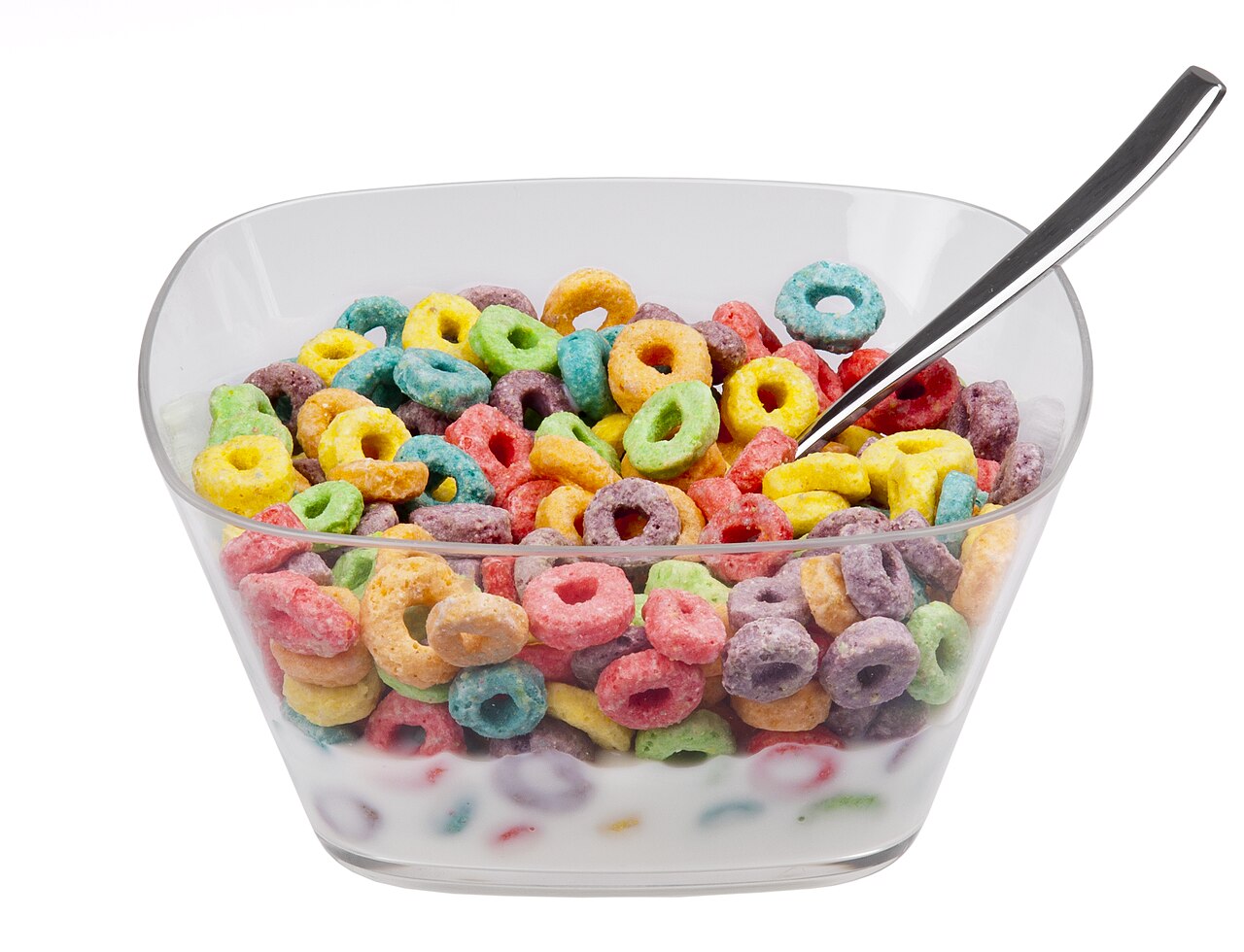
A bottler of Pepsi in Mexico told a court that in parts of the countryside where the tap water is unsafe, a soft drink is the more sensible thing to drink. In London, the cereal maker Kellogg's argued that its cornflakes should be judged for healthiness with the milk people pour over them, rather than as the dry sugary flakes sold in the box.
Both arguments were made in the service of stopping a public health rule — Mexico's warning labels on packaged food, and England's restrictions on where shops can display products high in fat, salt and sugar. Kellogg's lost. Many of the Mexican arguments were rejected too. But losing was never really the point.
A year-long investigation coordinated by the non-profit newsroom Lighthouse Reports, working with academics in Colombia, Brazil, Australia and the United States and published with more than a dozen outlets, has built the first systematic count of these cases. Between 2010 and 2025, in Mexico, Colombia, Brazil, the United States, the United Kingdom and India, food and drink companies and the trade bodies that represent them brought 239 legal challenges against measures intended to improve what people eat. Added together, the time those cases have spent in court comes to 595 years. Where the researchers could identify who was suing, more than a third of the corporate cases traced back to just nine parent companies, led by Coca-Cola, PepsiCo and Mondelez, the American group behind Oreo and Cadbury.
The policies under attack are mostly unglamorous and well-tested: front-of-pack labelling, which puts a warning symbol on the front of a package when a product is high in sugar, salt or saturated fat; limits on advertising junk food to children; and taxes on sugary drinks.
Four in five cases come from one country
The single most important number in the dataset is also the one that complicates it. Of the 239 challenges, 193 were filed in Mexico — a country that in 2020 introduced some of the world's strictest packaging rules, black octagons stamped on the front of anything exceeding thresholds for sugar, salt, fat or calories. Nearly a third of Mexican schoolchildren and 41 percent of adolescents were overweight in a 2022 national survey.
Companies argued the labels violated their constitutional rights, that the rules "demonised" their products, and that consumers had a right to information the octagons flattened. Judges dismissed many of those claims. The investigation does not set out, case by case, exactly which constitutional guarantees were invoked, which is a real gap: the difference between a company defending a property or commercial-speech right and a company filing purely for delay is the difference between ordinary legal recourse and something closer to obstruction. What the concentration does show is that this fight has been waged overwhelmingly on one battlefield. The other five countries produced 46 cases between them.
The plaintiff is rarely a brand you recognise
Brazil offers a cleaner view of the tactic. Of 17 lawsuits there, all but one were filed by industry associations rather than by named companies — a structure experts told the reporters keeps valuable brands off court documents that journalists and shoppers might read. The members of those associations include Coca-Cola, Nestlé, Mars, Ferrero, Mondelez and PepsiCo. Eleven of the cases targeted ANVISA, the national health regulator, over a rule requiring advertisements for low-nutrition food to carry more information. Some have been running for close to two decades with no end in sight. The rule has never taken effect.
Colombia's version is subtler still. Its constitution lets any citizen challenge a law, and nearly all 18 Colombian cases arrived that way, filed by individuals rather than corporations. Reporters found that many of those individuals were lawyers who had done work for food companies, and that their submissions leaned on the same arguments the industry made in public. Separately, in 2022, as Colombia debated a tax on sugary drinks and ultra-processed food, companies in those sectors gave 5.85 million euros to political parties — 40 percent of all party donations that year. Treating diet-related disease had cost the country an estimated 1.3 billion euros in 2021. It is the kind of arrangement that gives regulatory capture its name.
In Europe, the letter arrives before the lawsuit
The most effective legal pressure often never becomes a case at all. Before Kellogg's sued the UK government in 2022, it sent a pre-action letter — a formal warning of intent to litigate — a year earlier. Ferrero, the Italian family firm behind Nutella and Kinder, and its subsidiary Eat Natural sent their own letters over the same regulations two weeks before the ruling landed.
Across the European Union, reporters found industry groups repeatedly invoking state-aid, competition and single-market rules to argue that a proposed national sugar tax would be unlawful. Governments weighing a policy against the prospect of years in court frequently choose not to find out. Plans for an EU-wide sugar tax were watered down without anyone filing anything.
The cost is asymmetry, not illegality
None of this is unlawful. A company facing a new tax or an advertising ban has the same right to test it in court as anyone else, and sometimes it wins on the merits. But the resources are not symmetrical. In California, the American Beverage Association sued the coastal city of Santa Cruz, population around 60,000, over its soda tax; the city has held on so far, and the outcome may decide whether other self-governing California cities can tax sugary drinks at all. A decade earlier, a similar effort in neighbouring Watsonville collapsed under industry pressure, and reporters found the soda industry had recruited respected Black and Latino community figures to argue the taxes would hurt their own neighbourhoods. In India, where the food regulator has been drafting a labelling scheme since 2014 without adopting one, companies have instead sued Instagram creators who filmed themselves reading ingredient lists aloud.
The clearest counterexample sits in Britain, where a levy on sugary drinks did pass and most manufacturers cut sugar rather than pay it — evidence that these rules change products when they survive. The 595 years are the price of finding out whether they will.
Questions
What is an ultra-processed food?
It is the category nutrition researchers use for industrially formulated products made largely from refined substances and additives rather than whole ingredients — soft drinks, packaged snacks, instant noodles, mass-produced breads. They became ubiquitous in global food systems from the 1980s onward. See this overview of [ultra-processed food](https://en.wikipedia.org/wiki/Ultra-processed_food).
Do these lawsuits usually succeed?
Often not on the merits. Mexican judges rejected many of the industry's arguments and Kellogg's lost its UK case. The investigation's argument is that time itself is the win: a rule tied up in court for a decade is a rule that is not operating, and the threat of litigation deters smaller governments from proposing rules at all.
Why were so many of the cases filed in Mexico?
Mexico introduced unusually strict front-of-package warning labels in 2020, and its legal system gave companies many avenues to challenge them. That produced 193 of the 239 cases counted, which means the headline total is heavily shaped by a single country's regulatory fight.
What does front-of-pack labelling actually require?
It requires a symbol on the front of the package — a black octagon in Mexico, other shapes elsewhere — when a product exceeds set thresholds for sugar, salt, saturated fat or calories, so shoppers do not have to decode the small print on the back.